I was watching the Food Network last night and they were covering the Candy Convention. This is a conference where candy makers come out and show the newest innovations in sugary sweets. A company called Creative Concepts have developed a machine called the Twisted Tarts Candy Factory. This machine, resembling an arcade style video game, allows you to combine powder in several flavors and color (mostly sour) and transforms them into solid tarts right before your eyes. The machine filters the flavored powder into the mold and using 1200 pounds of pressure turns it into a candy tart. [Watch it in action]. Creative Concepts also has a similar machine that allows you to mix your own (pixie stick basically) sour tube of sugar treat ( I guess that's what I can call it). The treat is called Pucker Powder. (The website is pretty interesting [Check it out]).
A few posts ago I posted some concepts of the redesign of Sony's PSP. It's only right that I show the actual product. The new PSP: Go is the fastest PSP system yet coming in at about 44% faster than the previous models. It features a 16gb hard drive that allows you to save movies, tv shows, etc. directly to the drive. The PSP: Go comes in either black and white and is packaged with a USB cable and AC adaptor. This model is much smaller and thiner than it's predicessors neatly tucking the game controls underneath these screen. Ubergizmo has photos of the new PSP: Go in the hands of the reviewer so you can see the scale of the new game system very well. I know the reasoning behind making it smaller. However I'm curious as to how someone's giant man hands wil be able to play a game comfortably.
At this year's E3 conference, Microsoft unveiled it's much rumored motion sensor technology code named "Natal". Gamers would be able to play titles on the console using no controllers, no wires, basically no limits. Not only will it pick up large gestures, but it's even supposed to be able to detect minor movements such as wiggling of fingers. What makes this possible is a peripheral motion sensing camera that allows the device to detect pixel distance. In other words, it can detect not only the color of the objects in front of it, but how close they are to one another.
With Sony releasing demos of their own motion sensor technology, many are wondering what the delay was in releasing this and competing with the Wii. Remember a little gadget called the "Eye Toy"? The ability to track motion sans controller has been in development for a while. Consider the games that are typically offered on the two consoles. I would imagine games in the relm of Halo and Grand Theft Auto become difficult due to the currently established mental model of how those games are played. Moving your controller to walk around walls, pressing buttons to shoot make more sense than trying to do that in the real world around imaginary object. It's not to say that it's not possible, but in the initial phases it probably wasn't very practical. However the games demoed in the video would, in theory, work really well with controller-less game play. The gestures used to play these games would make enough sense that you wouldn't have to actually have a physical object in front of you.
The additional features such as teleconferencing and the navigation through the video and menus also seem very possible. There are many applications already using the technology. The only thing that seems a bit far fecthed is when the girl puts on a virtual outfit and models it on the screen. I would be interested to see how that worked in person. All in all what Microsoft has managed to do with this technology is a huge step into the future of game play. At the very least it begins to nip at the problem with obesity and America's sedentary lifestyle by making us get up and move.
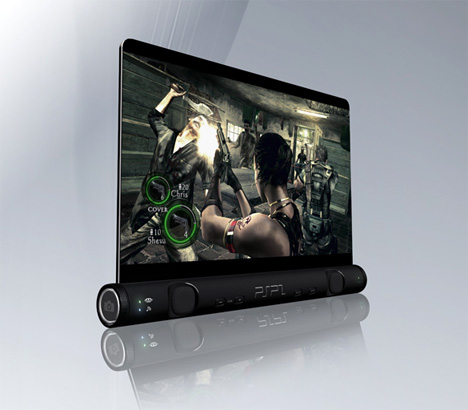
In 2003 Sony revealed a concept of a redesign for their portable gaming system PSP. The concept was ok, but the fans have truly taken it to another level. Check out how the fans think Sony should redesign the PSP. One even includes a possible merge with a mobile phone concept.



 Posts
Posts


